

1. Industry Challenges
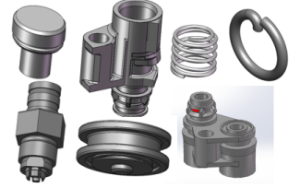
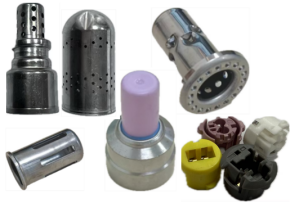
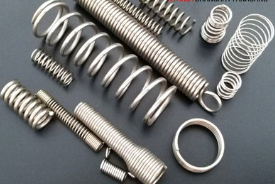
Automotive components cover an extensive product range, including precision sensors, copper terminals, aluminum heat sinks, bolts, screws, sealing elements, fasteners and miniature hardware parts, covering both standard and profiled components. Manufacturers face frequent product changeovers, and work pieces vary greatly in weight. Hard metallic parts cause severe wear on conventional tracks, while inconsistent part orientation undermines mass production stability. Traditional feeders require lengthy changeover time and suffer from high material stacking rate, unable to satisfy the demands for large-scale, high-precision assembly of automotive parts.
2.Customized Solutions
Adopting composite vibration technology, the system supports multi-dimensional adjustment of vibration frequency and amplitude to adapt to automotive components of different weights and sizes. The bowl is manufactured from thickened heat-treated aluminum alloy, and tracks undergo hardening and wear-resistance treatment to withstand long-term friction from metal work pieces and extend equipment service life.
For high-precision parts such as sensors and terminals, vision posture recognition systems can be integrated to standardize work piece orientation, lowering the stacking rate to below 0.8%. For standard fasteners including bolts and nuts, the system achieves high-speed continuous sorting and feeding, and seamlessly interfaces with robotic pickers, automatic assembly equipment and testing stations.
3.Operational Outcomes
Overall line efficiency is improved by 80%, perfectly adapting to the multi-variety, small-batch production mode of automotive component manufacturing. Feeding stability and daily throughput are markedly enhanced, with the assembly yield of automotive components hitting 99.8%. It thoroughly resolves assembly deviations derived from manual feeding and fully meets the rigorous mass production standards of the automotive industry.