Industry Solutions

Nullam dignissim, ante scelerisque the is euismod fermentum odio sem semper the is erat, a feugiat leo urna eget eros. Duis Aenean a imperdiet risus.
Nullam dignissim, ante scelerisque the is euismod fermentum odio sem semper the is erat, a feugiat leo urna eget eros. Duis Aenean a imperdiet risus.
Industry Solutions
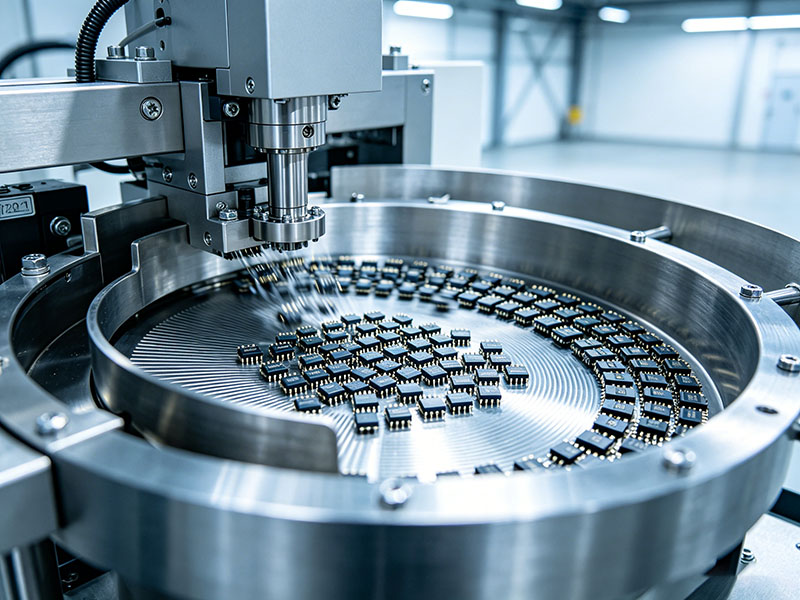
Our full-spectrum industrial solutions for vibratory bowl feeders are developed based on in-depth analysis of industry pain points and material characteristics, breaking the limitations of general-purpose feeding equipment. Centered on industry customization, flexible adaptability, high precision, operational stability and high efficiency, we deliver one-stop automated feeding solutions for the manufacturing sector. Covering precision electronics, high-end medical devices, automotive hardware and plastic products, our feeders tackle core industrial problems including feeding jamming, component damage, redundant labor, insufficient throughput and non-compliant production. We empower traditional manufacturers to realize automation, intelligentization and standardization upgrading, and consolidate the core competitiveness of production lines.
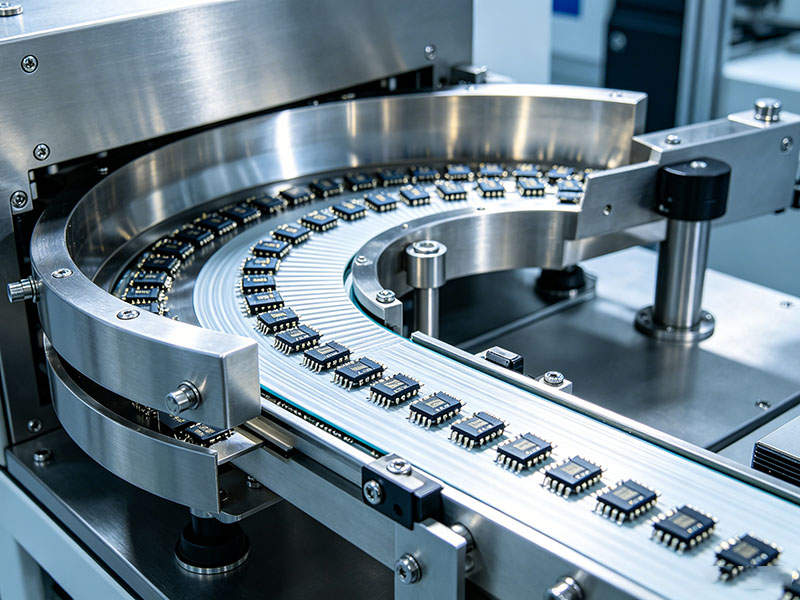
•Full-scenario Compatibility: Adaptable to micro precision parts, standard hardware components, profiled plastic parts, sterile medical parts and food packaging accessories. Customized bowls, tracks and vibration parameters are available to meet diversified feeding demands across all industries. •Cost Optimization & Productivity Enhancement: 24hunattended continuous feeding replaces repetitive manual work, reducing labor and rework costs while boosting production capacity by 30% to 80%. •High Precision & Reliable Operation: Integrated with intelligent anti-jamming, anti-static and posture calibration functions, the system maintains a feeding accuracy of over 99.5% and stable mass production performance, matching the requirements of high-precision automated lines. •Flexible & Rapid Changeover: Modular design supports one-click parameter adjustment and fast switching between different workpieces, well suited to the modern multi-variety, small-batch production mode. •Safety, Compliance & Long Service Life: Industry-specific compliant materials are adopted with excellent wear resistance and corrosion resistance. The equipment meets hygiene and safety standards for high-risk workshops, clean rooms, food and medical production environments, featuring long service life and low operation & maintenance costs.
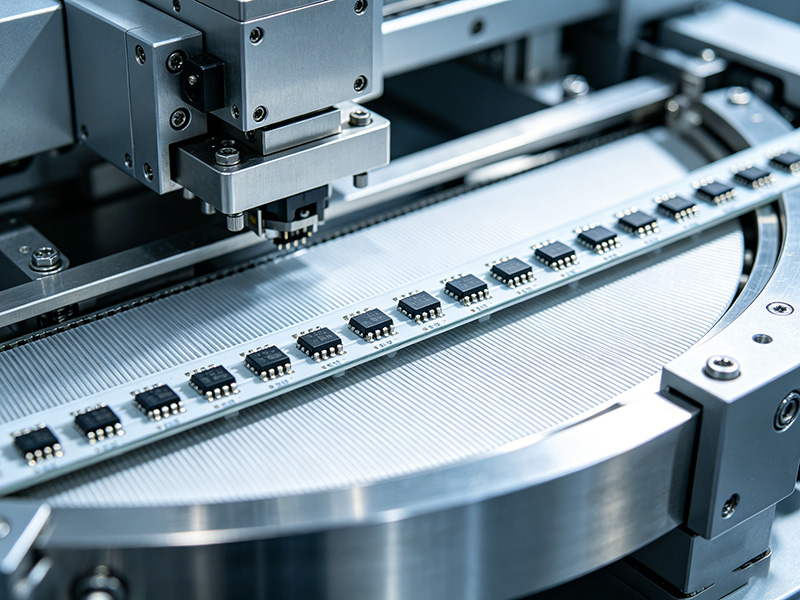
1.Industry Challenges Typical work pieces for medical devices include syringe assemblies, medical bone screws, rubber stoppers, surgical fittings and miniature medical hardware. Production in this sector mandates strict sterility, zero component damage and no secondary contamination. Conventional feeding equipment adopts non-compliant materials that breed bacteria and scratch work pieces, failing to meet GMP cleanliness standards. Extensive manual intervention also poses major contamination risks, violating sterile production specifications for medical products. 2.Customized Solutions We develop a clean-grade damage-free feeding system. The entire unit is constructed with medical-grade stainless steel, featuring dead-corner-free structure, superior clean ability and corrosion resistance, and it is compatible with high-temperature sterilization and clean room environments. Equipped with air filtration systems and positive-pressure clean enclosures, the equipment maintains qualified cleanliness and prevents dust and bacterial adhesion. The system applies an ultra-flexible low-frequency vibration mode with no rigid impact, realizing damage-free sorting and feeding for fragile and deform able parts such as micro medical bone screws and thin-wall syringe components. Fully enclosed automatic material conveying avoids secondary manual contact, in full compliance with GMP regulations for medical device production. 3.Operational Outcomes Work piece contamination rate approaches zero, with no scratches, deformation or breakage occurring during production. Production efficiency is doubled compared with manual operations. The whole workflow including part arranging, feeding and assembly for medical fittings runs fully unattended, fully satisfying the ultra-clean production requirements for high-end medical devices and precision medical components.

1. Industry Challenges Automotive components cover an extensive product range, including precision sensors, copper terminals, aluminum heat sinks, bolts, screws, sealing elements, fasteners and miniature hardware parts, covering both standard and profiled components. Manufacturers face frequent product changeovers, and work pieces vary greatly in weight. Hard metallic parts cause severe wear on conventional tracks, while inconsistent part orientation undermines mass production stability. Traditional feeders require lengthy changeover time and suffer from high material stacking rate, unable to satisfy the demands for large-scale, high-precision assembly of automotive parts. 2.Customized Solutions Adopting composite vibration technology, the system supports multi-dimensional adjustment of vibration frequency and amplitude to adapt to automotive components of different weights and sizes. The bowl is manufactured from thickened heat-treated aluminum alloy, and tracks undergo hardening and wear-resistance treatment to withstand long-term friction from metal work pieces and extend equipment service life. For high-precision parts such as sensors and terminals, vision posture recognition systems can be integrated to standardize work piece orientation, lowering the stacking rate to below 0.8%. For standard fasteners including bolts and nuts, the system achieves high-speed continuous sorting and feeding, and seamlessly interfaces with robotic pickers, automatic assembly equipment and testing stations. 3.Operational Outcomes Overall line efficiency is improved by 80%, perfectly adapting to the multi-variety, small-batch production mode of automotive component manufacturing. Feeding stability and daily throughput are markedly enhanced, with the assembly yield of automotive components hitting 99.8%. It thoroughly resolves assembly deviations derived from manual feeding and fully meets the rigorous mass production standards of the automotive industry.

Feeding is a critical bottleneck in industrial automated production lines, which directly restricts overall throughput, product yield and labor expenditure. Manual feeding, the conventional approach, is plagued by low productivity, disorganized part alignment, frequent component damage, human errors and prominent safety hazards in high-risk operations. As a core automated feeding unit, the vibratory bowl feeder delivers precise vibratory sorting, intelligent material conveying and outstanding operational flexibility. It enables automatic sorting, orientation and continuous feeding for profiled parts, precision components and standard fasteners across diverse industries, regardless of varying dimensions and materials. Compatible with assembly, inspection, welding, packaging, grinding and other production processes, our feeders eliminate upstream automation bottlenecks, helping manufacturers achieve cost reduction, quality improvement, productivity growth and safer production. This solution caters to six key sectors: electronics & semiconductors, automotive components, medical devices, precision hardware, food packaging and plastic products. Tailored to industry-specific operational pain points and material properties, our customized vibratory bowl feeder solutions support both mass standardized production and flexible custom manufacturing. Solutions for Electronics & Semiconductor Industry 1.Industry Challenges The electronics and semiconductor industry mainly processes miniature precision components, including chips, resistors, capacitors, terminals, crystal oscillators and surface mount devices. These tiny parts are susceptible to electrostatic adhesion, collision and surface scratches, and often present random postures during feeding. Material stacking and jamming occur frequently with conventional feeding methods, which easily cause component damage, electrostatic failure and positioning deviation. These issues lead to reduced product yield and fail to meet the stringent high-precision requirements of electronic assembly. 2. Customized Solutions We deploy a high-frequency low-amplitude flexible vibration system, paired with silicone-lined tracks and ionizing anti-static units to eliminate component damage and electrostatic risks at the source. Equipped with high-precision orienting chutes, the feeder unifies the electrode orientation of chips. Fully adjustable vibration parameters ensure smooth conveying of micro-components with zero collision and stacking. An intelligent anti-jamming monitoring module is integrated to automatically detect blockages, material shortages and overlapping parts. It triggers real-time alarms and performs automatic reset to sustain non-stop line operation. For irregular electronic micro-parts, optional flexible separators and vision positioning systems are available to sort unordered work pieces and realize high-precision feeding, fully matching the operational demands of SMT mounting, semiconductor packaging and electronic component assembly lines. 3. Operational Outcomes Component damage rate is controlled below 0.2%, with electrostatic failure nearly eliminated. Feeding accuracy reaches 99.8%, completely eliminating deviations caused by manual sorting. Labor costs per production line are cut by 50%, and the system supports 24h unattended continuous feeding. The solution fully complies with the stringent requirements for high precision, ultra-clean environment and superior operational stability in semiconductor and 3C electronics manufacturing.